
Shop the Wabi-Sabi Bedroom: Six Japandi Essentials Under $300
8 May 2026
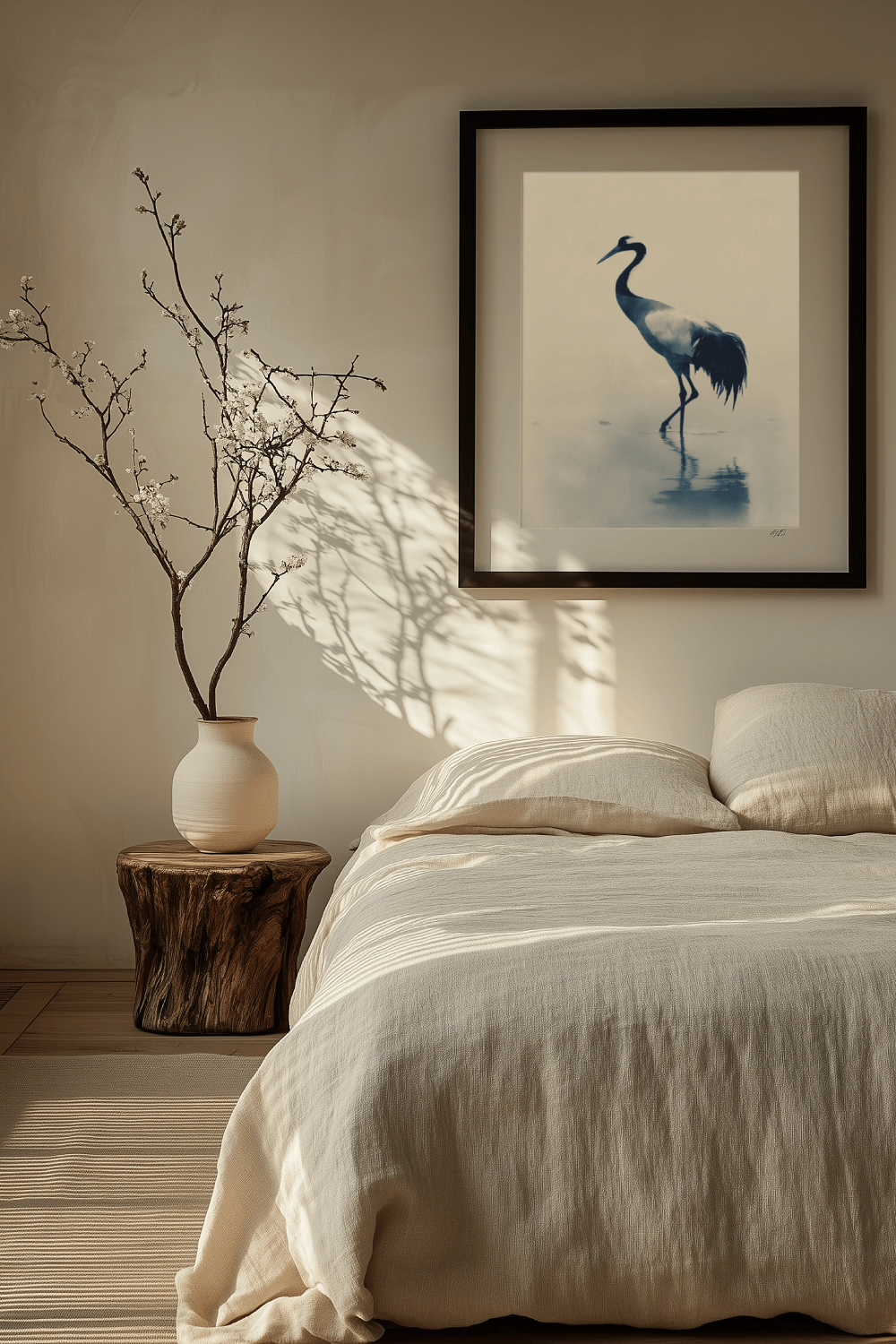
A serene Japandi bedroom rooted in the quiet presence of a single ink-and-cream crane print.
Wabi-sabi (侘寂) is the Japanese aesthetic of finding beauty in imperfection, simplicity, and the patina of time. Paired with Scandinavian restraint — what designers now call Japandi — it creates rooms that feel calm, considered, and lived-in.
Below are six pieces I've curated to anchor a Japandi bedroom around an original Yugen Print artwork. Each one is intentionally chosen for the aesthetic, not just the algorithm.
This post contains affiliate links. As an Amazon Associate I earn from qualifying purchases at no extra cost to you.
1. The Print: Your Wall's Quiet Anchor

The artwork is the soul of the room. Hung at gallery scale (18x24 inches) above the bed, framed simply in thin black wood, it becomes the room's contemplative focal point.
→ Shop the Indigo Crane Print at Yugen Print
→ Shop the Indigo Crane Print on Etsy

For framing, I recommend a thin profile solid oak frame, 16x24 inches portrait. The Wallwisy solid oak frame (Amazon's Choice, 800+ reviews) holds a 16x24 print directly, or a 12x18 print with the included mat — versatile across multiple print sizes, and a genuine wood anchor for the ink-wash tones.
→ Wallwisy 16x24 Solid Oak Frame
2. The Vase: Cream Ceramic with Quiet Texture
In Japandi styling, vessels matter as much as what goes in them. A textured ceramic vase sets the tone — natural materials, soft palette, restrained form.

Budget pick (shown in scene): Vanselia Ceramic Flower Vase
Textured cream ceramic with subtle ridges. Available in 10+ neutral tones to match your existing palette.
→ Vanselia Ceramic Vase

Aesthetic pick: Rusty Wabi-Sabi Ceramic Vase
Dark, weathered, asymmetric. Genuinely embraces the wabi-sabi principle of beauty in age and imperfection.
→ Rusty Wabi-Sabi Ceramic Vase

Investment piece: Tokoname-yaki Japanese Ceramic Ikebana Vase
Authentic handmade pottery from one of Japan's six ancient kiln traditions. Asymmetric organic form, natural kiln glaze, the kind of vessel that has been made the same way for nearly 900 years. A piece that anchors a room with real provenance.
→ Tokoname-yaki Japanese Ikebana Vase
3. The Botanical: One Stem, Not a Bouquet
The Japandi principle of ma (間) — negative space — means a single stem in a vase often reads more elegant than a full arrangement. Restraint is the point.

Aesthetic pick (shown in scene): Real Dried Pussywillow Branches
Pussywillow (neko-yanagi / 猫柳) has been used in Japanese ikebana for centuries. Vertical silhouette, soft grey buds, sculptural without being loud.
→ Real Dried Pussywillow Branches

Budget pick: Mixed Pampas & Bunny Tails Bundle, 100 stems
Pull two or three slender stems for a minimal arrangement. Save the rest for seasonal restyling.
→ Mixed Pampas & Bunny Tails Bundle

Statement pick: Dried Lotus Pods, Set of 11
Sculptural, architectural, deeply tied to Japanese Buddhist aesthetics — symbols of the cycle of seasons and the beauty of impermanence.
→ Dried Lotus Pods
4. The Coverlet: Soft Texture at the Foot of the Bed
A textured coverlet layered casually at the foot of the bed adds visual depth without breaking the palette. Look for natural materials and rumpled folds — perfectly made beds read as staged; a softly rumpled coverlet reads as lived-in.

Shown in scene: Bedsure GentleSoft 100% Cotton Blanket
Subtle herringbone weave in soft oatmeal. Available in cream, sand, sage, charcoal, and more.
→ Bedsure GentleSoft 100% Cotton Blanket
5. The Lighting: Soft, Indirect, Warm
Lighting is the third pillar of Japandi atmosphere. Rice paper diffuses warmth without harshness — the same principle as a traditional shōji (障子) screen.

Floor lamp (shown in scene): Japanese Rice Paper Floor Lamp, Square
Tall pillar silhouette, soft beige paper, easy assembly. Sculptural enough to anchor a corner without dominating the room.
→ Japanese Rice Paper Floor Lamp

Bedside accent: Small Rice Paper Table Lamp
Sculptural egg form on tripod legs, inspired by Isamu Noguchi's iconic Akari lamp series from the 1950s.
→ Small Rice Paper Table Lamp
Tip: Pair with warm-white 2700K bulbs for the softest, most authentically Japandi light.
6. The Side Table: Beauty in Natural Imperfection
In Wabi-sabi, the imperfections of natural materials are the point. Knots, asymmetry, live edges — these are the qualities to seek out, not avoid.

Shown in scene: WELLAND Natural Tree Stump Side Table
Hand-shaped from a single piece of wood. Each one is unique — slightly different grain, knots, and curves. Use it bedside, beside a soaking tub, as a low plant stand, or as extra seating.
→ WELLAND Natural Tree Stump Side Table
The Philosophy Behind the Room
Wabi-sabi is not a style you apply. It's a way of seeing — the recognition that nothing is permanent, nothing is finished, nothing is perfect. A weathered ceramic vase, a knotted piece of wood, a single sprig of pussywillow against an empty wall: each of these holds more presence than a hundred matching accessories.
Japandi takes that quiet sensibility and joins it with Scandinavian functionality — clean lines, natural materials, light palettes, breathing space. The result is a bedroom that feels less like a showroom and more like a place where time slows down.
When you build a room around a single anchor piece — like an original ink-brushwork print — every surrounding object becomes a supporting note in a quieter conversation. Less noise. More meaning.